



The Ghost in the Machine: A Story of Your Credit Score
Let’s talk about the ghost. It’s a quiet one. Doesn’t make a sound. It lives in the wires and servers of modern finance. This ghost is a number. Your number. A three-digit code that knows you better than you might think. It knows if you paid that credit card bill last Tuesday. It remembers that loan you took five years ago. This is the story of your credit score. It ain’t just a number on a app. It’s your financial shadow. And it’s time you two became properly acquainted.
Most people, they ignore it. Until they can’t. Until they sit in a bank and see a frown. The loan officer shakes his head. The number spoke. And it told a story they didn’t want told. This doesn’t have to be you. Let’s change the narrative.


The Scribes: Who Writes Your Story?
Every story needs a author. Yours has four. In India, we have the Credit Bureaus. The scribes. The note-takers. CIBIL, Experian, Equifax, CRIF High Mark. They sit in digital halls, recording every move you make with money.
CIBIL. That’s the name everyone knows. It’s become the thing itself. “Check your CIBIL,” they say. But the others, they matter too. They all have their own book on you. Their own way of adding up the points. Sometimes the numbers don’t match. It’s a bit confusing, sure. But that’s the system. A imperfect machine.
They don’t hate you. They don’t love you. They just record. Faithfully. Your job is to give them a good story to tell. check your credit score here
Table 1: The Four Scribes of the Financial Realm
| The Bureau | Their Particular Vibe |
|---|---|
| TransUnion CIBIL | The OG. The most famous. The one every banker looks at first. |
| Experian | The tech-savvy one. Sends you your score on WhatsApp. Easy. |
| Equifax | The clear one. Tries to make their reports understandable. A good thing. |
| CRIF High Mark | The specialist. Knows all about micro-loans, the smaller stories. |
The Recipe: The Five Ingredients of Your Score
So how do they cook the number? It’s a secret recipe. But we stole a peek at the cookbook. There’s five main ingredients. They all get thrown into the pot.
1. Payment History. (35% of the pie)
This is the big one. The main character of your story. Did you pay? On time? Every time? It’s a simple question. The answer is everything. A single late payment is a blot of ink on a clean page. It stains. It stands out for years. Lenders see that stain. They see a person who forgets. A risk. Don’t be that person. Set reminders. Auto-debit. Do whatever it takes. This is the foundation. If this cracks, everything else wobbles.
2. Credit Utilisation. (30% of your fate)
They give you a limit. A financial boundary. How much of that space do you fill? This is a test of restraint. If you’re constantly hitting 80%, 90% of your limit, you look hungry. Desperate. It screams financial stress. It makes the algorithm nervous. And a nervous algorithm is a strict one. The magic line is 30%. Stay under it. It shows you have space. It shows you are in control. Not the debt.

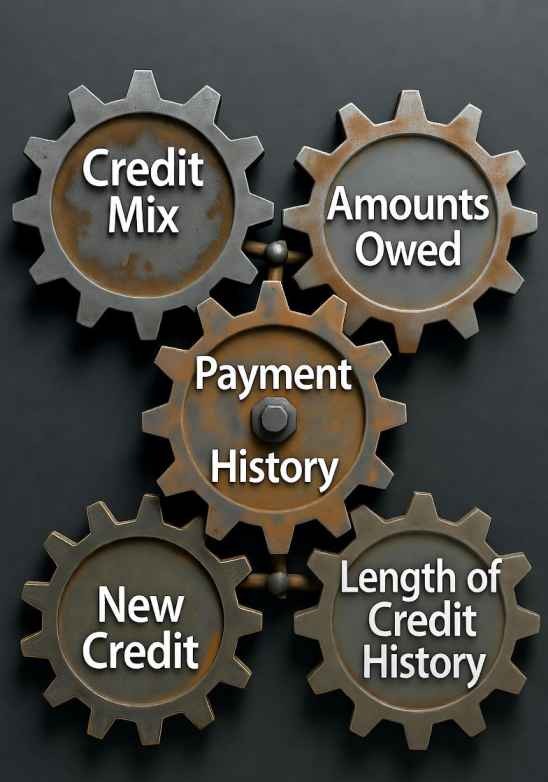
3. Credit History Length. (15% for wisdom)
In finance, age is respected. Your oldest credit account is your elder. It speaks of experience. A long, clean history is a epic tale of reliability. That first credit card from your first job? It’s a veteran. It’s seen battles. It gives your story depth. Closing it is like burning the first chapter of your own book. Don’t do it. It shortens your memory. Makes your story seem smaller than it is.
4. Credit Mix. (10% for versatility)
Can you juggle? This ingredient checks. A mix of credit—a home loan (installment) and a credit card (revolving)—shows you can handle different financial instruments. It’s like a chef who can cook both Indian and Chinese. It shows skill. But. This is not a invitation to go get new loans. Taking a loan just for mix is like buying a wok to only use once. Silly. Let the mix happen naturally over time.
5. New Credit. (10% for patience)
You applied for a card. Then another. Then a loan. Slow down. Each application triggers a “hard inquiry.” One or two is fine. A bunch in a few months? It looks like you’re on a spree. It looks like you’re desperate for cash. That is a red flag. A big, waving red flag. It makes lenders ask, “Why? What’s wrong?” Space out your applications. Be patient. Look calm, even if you aren’t.
The Verdict: What Your Number Really Says
You got the number. You checked the app. Now what? What story does it tell the world?
Table 2: The Translation of Your Score
| The Score Range | The Official Rating | The Street Translation |
|---|---|---|
| 750 – 900 | Excellent to Very Good | “You’re a Rockstar.” Doors open. Smiles from bankers. You get the best rates. You have power. You win the game. |
| 700 – 749 | Good | “You’re Alright.” You’ll get the loan. Probably. But don’t expect the red carpet treatment. It’s a transaction. |
| 650 – 699 | Fair | “You’re on Thin Ice.” They will scrutinize you. Ask for more documents. The interest rate will be higher. It’s a hassle. |
| 300 – 649 | Poor to Low | “It’s a Tough Road.” They don’t trust you. The financial doors are closing. You need a plan to fix this. Now. |
The Redemption Arc: Fixing a Broken Story
A bad score feels like a life sentence. It’s not. It’s just a bad chapter. You can write a new one. I seen it happen. Let me tell you about Rohan.
Rohan’s score was 590. A disaster. He felt trapped. Ashamed. But he decided to fight back. His journey is a blueprint.
He started with the payments. He became a fanatic. Alarms. Calendar reminders. Auto-debit for everything. He made his payment history a boring, perfect record. No drama. No excitement. Just green ticks. This is the way.
Then, he tackled his cards. He had two, both nearly maxed out. He stopped using them. He threw every extra rupee at the balance. He fought that utilization ratio down from 95% to 25%. It was a grind. But he did it. He looked less desperate to the machines.
Next, the audit. He checked his CIBIL report. Free once a year. And he found it. A mistake. A small loan he had co-signed for a friend, but it was marked as defaulted long after it was closed. A error. A ghost from the past. He disputed it. Wrote emails. Made calls. It took two months. But the bureau corrected it. His score jumped 50 points overnight. Just from fixing a mistake.
He stopped applying for new credit. He let his history breathe. He healed. He let time become his ally.
It wasn’t a quick fix. It took eighteen months. But his score went from 590 to 760. A redemption arc. He walked into the same bank. Same officer. Different outcome. The number told a new story. A story of discipline. Of recovery.
You can do this. The path is clear. Pay like a clock. Use less than a third of your limit. Check your report for errors. Be patient. The ghost in the machine can be befriended. It can even be made to sing your praises.


The Final Chapter is Yours to Write
This number, this ghost, it’s not going away. Its power is only growing. Landlords check it now. Some employers do too. It’s your financial passport.
So learn its language. Play the long game. Tell a good story with your financial habits. A story of consistency, not chaos. Of patience, not desperation.
Because in the end, you aren’t just a number. But you have to prove it. You have to show the machines that a human being, with discipline and smart choices, is the best credit risk of all. Start today. Check your score. Know your story. Then get to work writing the next chapter. A better one. The first step to winning any game is knowing the score. Literally.
for more konwledge visit creditsunny.live
itsunny.live